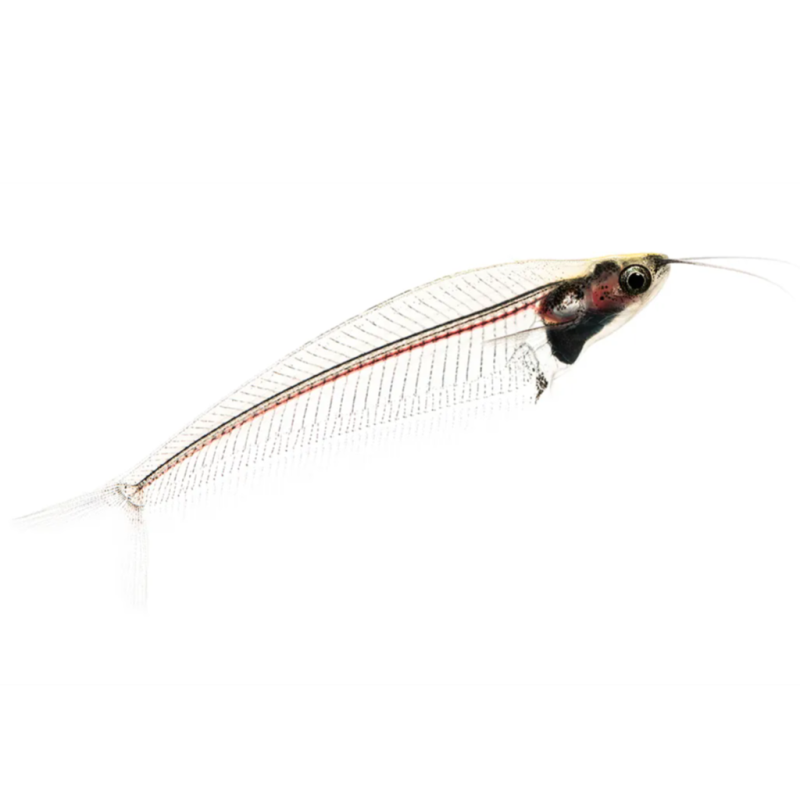
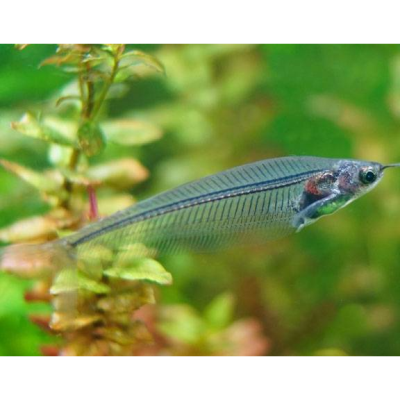
The Glass Catfish, also known as the Ghost Catfish, is a fascinating and unique freshwater species renowned for its transparent body, which gives it a ghostly appearance. Native to Southeast Asia, this peaceful, semi-transparent catfish is a great choice for aquarists looking to add a striking, low-maintenance fish to their community tank. With a delicate look and a gentle nature, it thrives in well-planted tanks and enjoys being in schools.
Care Guide
- Scientific Name: Kryptopterus vitreolus
- Common Names: Glass Catfish, Ghost Catfish, Phantom Catfish
- Family: Siluridae
- Origin: Southeast Asia (Thailand, Vietnam, Cambodia, Laos)
- Adult Size:3–4 inches (8–10 cm)
- Lifespan:5–7 years
- Temperament:Peaceful, social, nocturnal
- Diet:Omnivore – enjoys sinking pellets, live or frozen foods (brine shrimp, bloodworms), and plant matter
- Tank Size:Minimum 20 gallons
- Water Parameters:
- Temperature: 75–82°F (24–28°C)
- pH: 6.0–7.5
- Hardness: 2–12 dGH
- Water Flow: Moderate
Tank Setup
- Best kept in schools of 4 or more to reduce stress and mimic their natural schooling behavior.
- Prefers soft, sandy or fine gravel substrates and plenty of plants to provide cover and a natural environment.
- Compatible tankmates: Peaceful fish like Tetras, Corydoras, Guppies, and other non-aggressive species. Avoid keeping with larger, more aggressive fish that could stress or harm them.
- A gentle filter is ideal to maintain water quality without strong currents, as Glass Catfish prefer calmer conditions.
Care Difficulty: Moderate
✅ Best for: Intermediate-to-experienced aquarists.
✅ Key Challenges: Requires stable water conditions and a school of individuals for optimal health. Their delicate bodies mean they can be sensitive to water changes, so careful water maintenance is essential.
✅ Recommended for:Peaceful, well-planted community tanks with compatible species.
Interesting Facts
- The translucent appearance of the Glass Catfish is due to the lack of pigmentation in its body, allowing you to see its internal organs.
- They are active during the night and may spend most of the day hiding among plants or decorations.
- They have a unique feeding behavior, using their barbels to detect food on the substrate or in the water.













 Last added to Cart