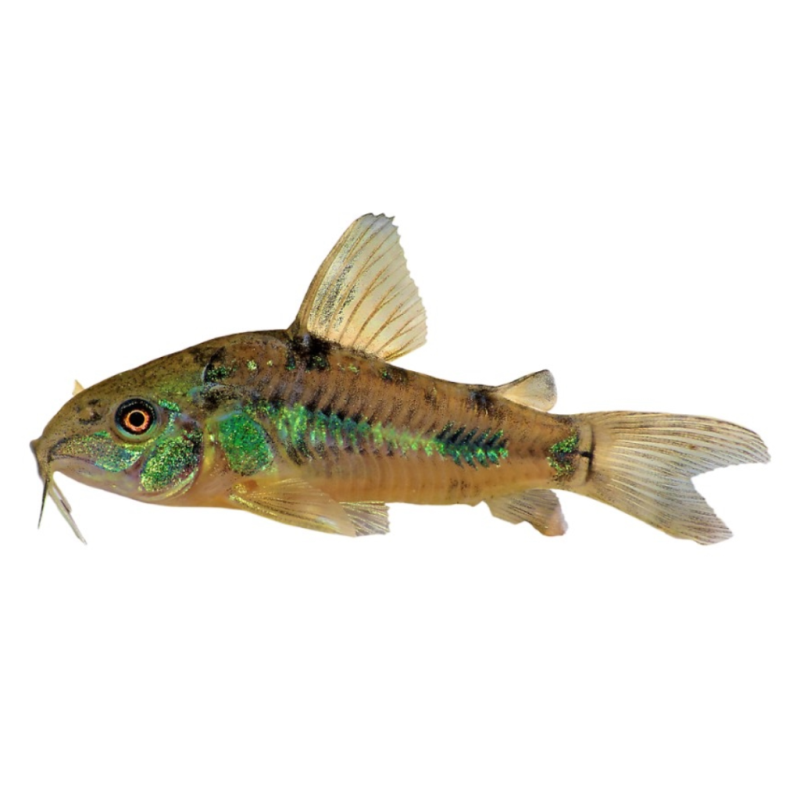
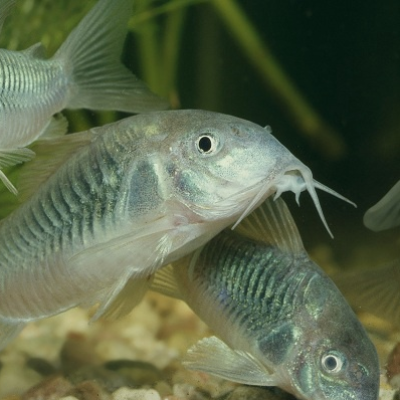
Assorted Corydoras refers to a variety of Corydoras catfish species that are often sold in mixed batches. These small, peaceful bottom-dwelling fish are famous for their charming personalities, distinctive barbels around their mouths, and ability to help keep the substrate clean. With a wide range of species and colors, they are a popular choice for community aquariums due to their peaceful nature and beneficial cleaning habits.
Care Guide
- Scientific Name: Various species within the Corydoras genus
- Common Names: Cory Catfish, Corydoras
- Family: Callichthyidae
- Origin: South America (Amazon River Basin, Orinoco River)
- Adult Size:1.5–3 inches (4–7 cm)
- Lifespan:5–10 years
- Temperament:Peaceful, social, active
- Diet:Omnivore – enjoys sinking pellets, frozen or live foods (bloodworms, brine shrimp), and plant matter
- Tank Size:Minimum 20 gallons (larger preferred for schools)
- Water Parameters:
- Temperature: 72–78°F (22–26°C)
- pH: 6.0–7.5
- Hardness: 2–15 dGH
- Water Flow: Low to moderate
Tank Setup
- Corydoras are social fish that should be kept in groups of at least 3–5 individuals to feel secure.
- They enjoy well-planted tanks with gentle filtration and soft substrates like sand or fine gravel, as rough gravel can injure their sensitive barbels.
- Compatible tankmates: Peaceful fish such as Tetras, Betta (males only in certain conditions), Guppies, and other small, non-aggressive species.
- Provide hiding spots and areas of darkness for when they need rest.
Care Difficulty: Easy
✅ Best for: Beginner-to-intermediate aquarists.
✅ Key Challenges: Keep them in groups to avoid stress and ensure that they have soft, fine substrates to protect their barbels.
✅ Recommended for:Community tanks with a peaceful and diverse selection of fish.
Interesting Facts
- Corydoras catfish are active scavengers, often seen "sifting" through the substrate for leftover food.
- They are labyrinth fish, capable of breathing air through a specialized organ, though they prefer oxygen-rich water.
- Corydoras are known for their "schooling" behavior and will often swim together in tight groups.













 Last added to Cart