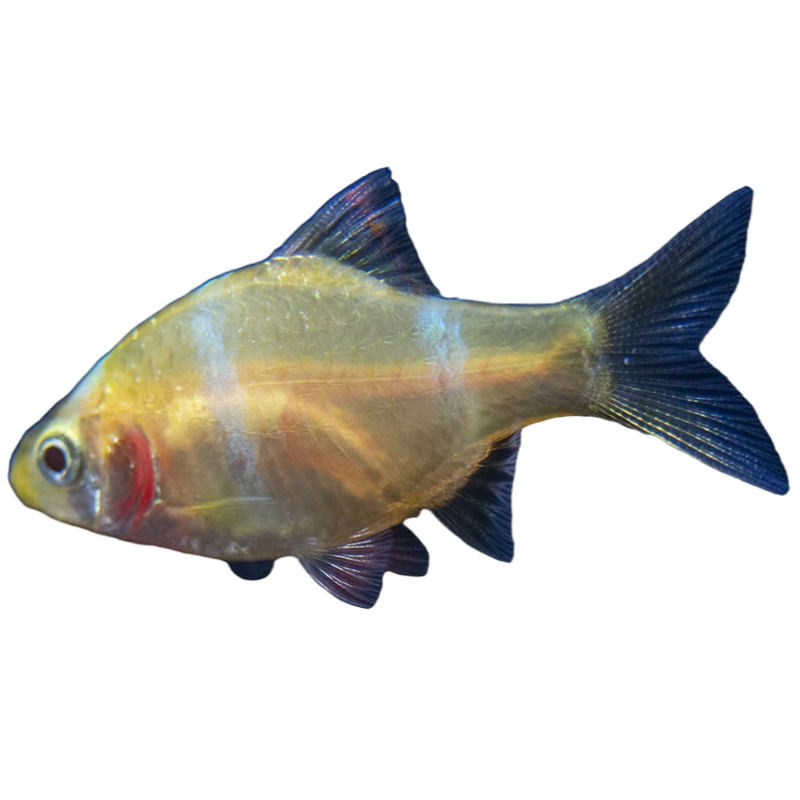
The Albino Tiger Barb is a unique color variant of the popular Tiger Barb. Instead of the classic black stripes, this variety features a creamy white body with red or orange accents on the fins and face. It retains the same lively and active personality as standard Tiger Barbs, making it a fun addition to a well-planned community tank.
Care Guide
- Scientific Name: Puntigrus tetrazona “Albino”
- Common Names: Albino Tiger Barb
- Family: Cyprinidae
- Origin: Borneo, Sumatra, and Southeast Asia
- Adult Size:2–3 inches (5–7 cm)
- Lifespan:5–7 years
- Temperament:Semi-aggressive, social, active
- Diet:Omnivore – enjoys high-quality flakes, pellets, frozen foods (brine shrimp, bloodworms), and occasional plant matter
- Tank Size:Minimum 20 gallons (larger preferred for a bigger school)
- Water Parameters:
- Temperature: 72–80°F (22–27°C)
- pH: 6.0–7.5
- Hardness: 5–12 dGH
- Water Flow: Moderate
Tank Setup
- Best kept in groups of 6 or more to reduce fin-nipping behavior.
- Active swimmers that need open space but also enjoy plants and decorations for hiding.
- Compatible tankmates: Other fast-moving, semi-aggressive fish like Danios, larger Tetras, Loaches, and other Barbs. Avoid slow-moving, long-finned fish (like Bettas and Guppies), as Tiger Barbs may nip at their fins.
- Prefers good filtration and moderate water movement to mimic natural river conditions.
Care Difficulty: Easy to Moderate
✅ Best for: Beginner-to-intermediate aquarists.
✅ Key Challenges: Can be fin-nippy if not kept in a large enough school. Needs stable water conditions for best health.
✅ Recommended for:Lively community tanks with similarly active fish.
Interesting Facts
- Their albino coloration is a result of selective breeding.
- Like regular Tiger Barbs, they are playful, fast, and energetic, often seen chasing each other.
- Their color intensity can change based on mood, health, and water conditions.











 Last added to Cart