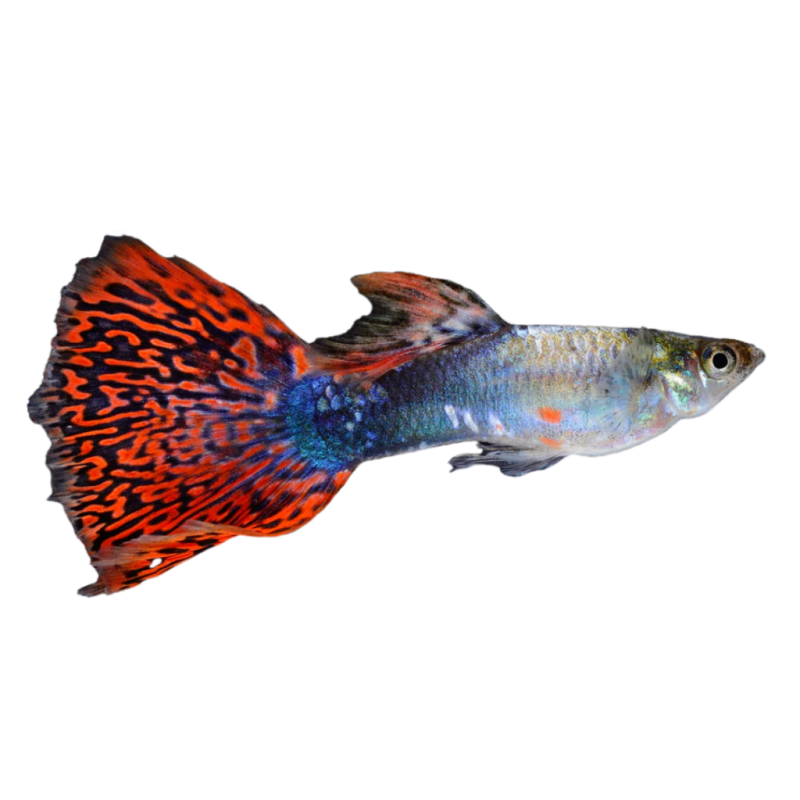
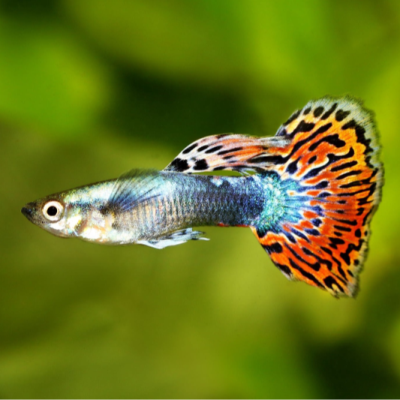
The Fancy Guppy is one of the most popular aquarium fish, known for its vibrant colors and easily recognizable tail shapes. This small, peaceful species is a favorite among aquarists due to its beautiful array of colors, ease of care, and ability to thrive in a variety of tank setups. The Fancy Guppy is a great choice for community tanks or breeding setups, as they are livebearers and reproduce easily.
Care Guide
- Scientific Name: Poecilia reticulata
- Common Names: Fancy Guppy, Endler’s Guppy (if from a specific strain)
- Family: Poeciliidae
- Origin: South America (specifically from parts of Venezuela, Colombia, and other tropical regions)
- Adult Size:1.5–2 inches (4–5 cm)
- Lifespan:2–3 years
- Temperament:Peaceful, social
- Diet:Omnivore – enjoys flakes, pellets, live or frozen foods (brine shrimp, daphnia), and plant matter
- Tank Size:Minimum 10 gallons
- Water Parameters:
- Temperature: 72–82°F (22–28°C)
- pH: 7.0–8.0
- Hardness: 10–20 dGH
- Water Flow: Low to moderate
Tank Setup
- Fancy Guppies enjoy planted tanks with open swimming spaces. They are very active, so a tank with plants, decorations, and hiding spots is ideal for creating a natural environment.
- They prefer clean water and will do well in tanks with gentle filtration.
- Compatible tankmates: Peaceful fish like Tetras, Corydoras, Mollies, and Platies. Guppies can be kept with other non-aggressive fish but should not be housed with large or overly aggressive species.
- Since they are livebearers, if males are present, there will likely be breeding in the tank, so it’s essential to consider tankmates that are not predatory toward the young guppies.
Care Difficulty: Easy
✅ Best for: Beginner-to-intermediate aquarists.
✅ Key Challenges: Maintaining a healthy breeding environment and ensuring a balance between male and female guppies to avoid overpopulation.
✅ Recommended for:Community tanks, breeding setups, and those looking for a colorful, lively species that adds personality to a tank.
Interesting Facts
- Fancy Guppies are known for their wide variety of colors, including shades of red, blue, green, yellow, and metallic hues, as well as various tail shapes like fan-shaped, swordtail, and delta.
- They are livebearers, meaning the females give birth to free-swimming fry instead of laying eggs.
- Male guppies are often more colorful than females, with long, flowing tails that they use to attract mates.
- Guppies are known for their high reproductive rates, so it’s essential to provide enough space to prevent overpopulation in the tank.













 Last added to Cart