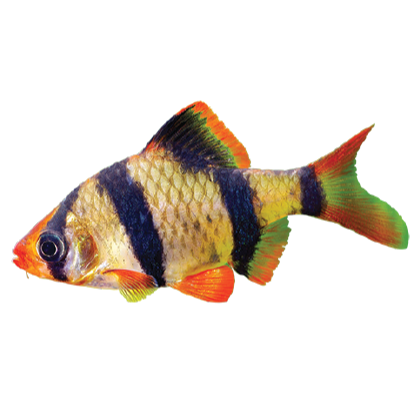
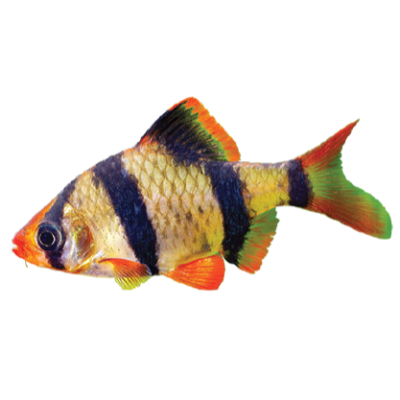
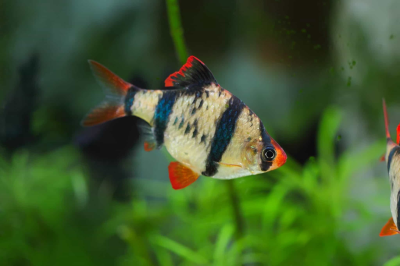
The Tiger Barb is a lively, fast-moving freshwater fish known for its bold black stripes, golden-orange body, and red-tipped fins. Native to Southeast Asia, these energetic schooling fish bring action and vibrancy to community aquariums. However, they can be fin-nippy if not kept in proper group sizes.
Care Guide
- Scientific Name: Puntigrus tetrazona
- Common Names: Tiger Barb, Sumatra Barb
- Family: Cyprinidae
- Origin: Southeast Asia (Borneo, Sumatra, Malaysia)
- Adult Size:2–3 inches (5–7 cm)
- Lifespan:5–7 years
- Temperament:Semi-aggressive, active, social
- Diet:Omnivore – eats high-quality flakes, pellets, frozen foods (brine shrimp, bloodworms), and occasional plant-based foods
- Tank Size:Minimum 20 gallons (larger preferred for bigger schools)
- Water Parameters:
- Temperature: 72–80°F (22–27°C)
- pH: 6.0–7.5
- Hardness: 5–12 dGH
- Water Flow: Moderate
Tank Setup
- Best kept in groups of 6 or more to prevent aggression and fin-nipping.
- Requires open swimming space and planted areas for hiding.
- Compatible tankmates: Other fast-moving fish like Danios, Rainbowfish, larger Tetras, and other Barbs. Avoid slow-moving or long-finned fish (like Bettas, Angelfish, and Guppies).
- Good filtration and moderate water movement help mimic their natural habitat.
Care Difficulty: Easy to Moderate
✅ Best for: Beginner-to-intermediate aquarists.
✅ Key Challenges: Can be fin-nippy if not kept in a large enough school. Needs stable water conditions for best health.
✅ Recommended for:Active community tanks with similarly energetic fish.
Interesting Facts
- One of the most popular and widely available barbs in the aquarium hobby.
- Their playful behavior makes them fun to watch, as they often chase each other in the tank.
- Tiger Barbs exist in several color variations, including Albino, Green, and GloFish varieties.













 Last added to Cart